


Tasting a Sancerre Like a Pro: Essential Steps
The Sancerre appellation, nestled in the heart of the Loire Valley vineyard, boasts an exceptional terroir that yields prestigious white wines. Made from the Sauvignon Blanc grape, these wines reveal refined minerality and an elegant aromatic palette. To fully appreciate their richness, mastering the art of tasting is essential. This guide walks you through each step for an unforgettable sensory experience, exploring best practices to savour a Sancerre blanc properly.
Preparation for Tasting
Ideal Serving Temperature
Serving temperature is crucial. A Sancerre blanc expresses itself fully between 9 °C and 12 °C. Below this, aromas remain muted; above it, the balance between acidity and freshness can be compromised.
Tip: Chill the bottle in the fridge for 2–3 hours beforehand, or for 20 minutes in an ice-and-water bucket.
Choosing the Right Glass
A tulip-shaped white wine glass is recommended to concentrate aromas and enhance tasting. Its flared bowl and narrowed rim gently guide scents to the nose, improving perception of the wine’s aromatic complexity.
Optimal Tasting Environment
For precise sensory analysis, choose a setting that is:
- Bright, ideally with natural light
- Neutral in smells, free of perfumes or smoke
- Quiet, for full immersion in the experience
Steps to Taste a Sancerre Blanc
Visual Analysis: Observing the Wine’s Appearance
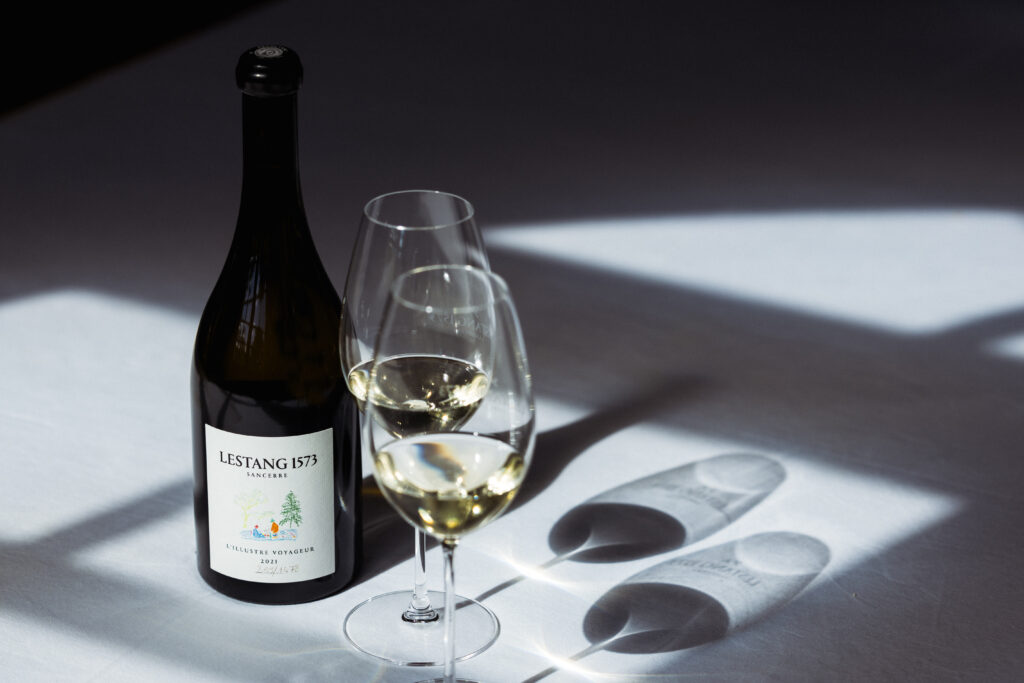
Before smelling, examine the wine’s appearance. A Sancerre blanc typically shows a pale yellow hue with green reflections, indicating its freshness and aging potential. A clear, bright wine often signals impeccable quality.
The Château de Lestang’s cuvée Lestang 1573 Tradition exemplifies this visual purity, reflecting a refined, balanced Sancerre.
Olfactory Analysis: Revealing the Aromas
Smell the wine in two stages:
- First nose (no swirling): primary aromas tied to grape and terroir (citrus, white fruit, minerality).
- Second nose (after swirling): secondary and tertiary aromas emerge, enriched by aging and aeration.
For example, Lestang 1573 L’Illustre Voyageur offers an intense mineral first nose (flint) followed by notes of Granny Smith apple and verbena after aeration—signature of a rich, expressive terroir.
Gustatory Analysis: Savouring on the Palate
During tasting, focus on three key phases:
- Attack: initial sensations, often bright and refreshing
- Mid-palate: reveals texture and aromatic balance
- Finish: persistence of flavors, indicating the wine’s complexity and quality
With Lestang 1573 Tradition, expect a zesty citrus attack, a fruity, tangy mid-palate, and a long, fresh finish—the hallmark of a great Sancerre blanc.
Food Pairings: Elevating a Sancerre Blanc
A Sancerre blanc pairs beautifully with dishes that respect its aromatic balance and liveliness:
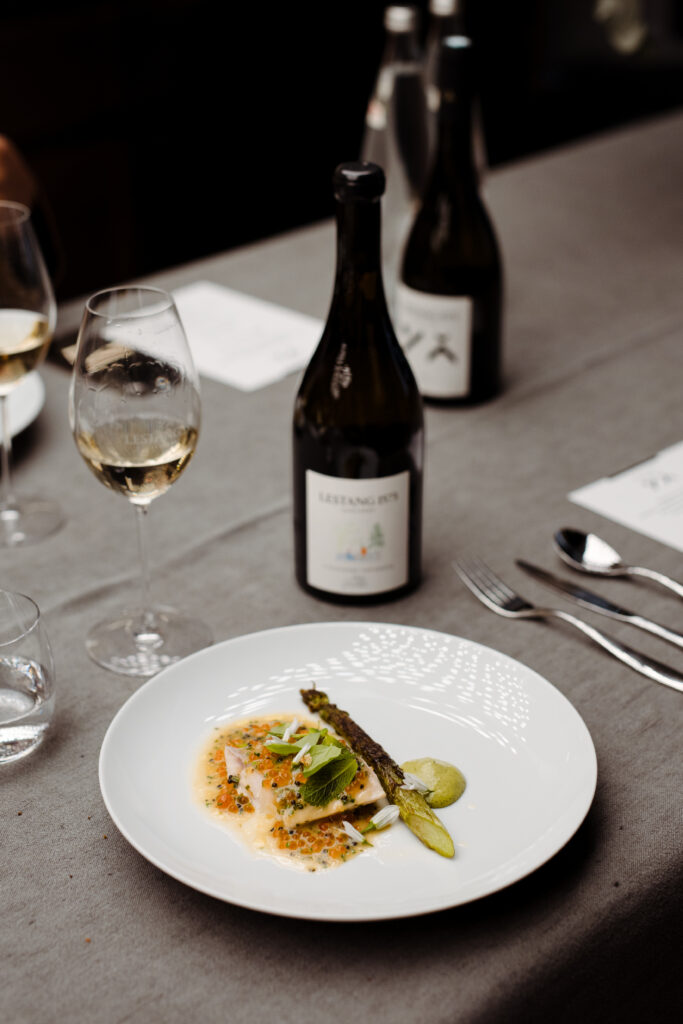
- Seafood & shellfish (oysters, shrimp, langoustines) – acidity and citrus notes enhance the freshness of seafood
- Goat cheeses (Crottin de Chavignol) – the wine’s minerality echoes the cheese’s creamy texture for perfect harmony
- Vegetarian dishes & green vegetables (asparagus, summer salads) – shared herbal notes marry seamlessly with Sauvignon Blanc
FAQ – Frequently Asked Questions on Tasting Sancerre
What Is the Ageing Potential of a Sancerre Blanc?
A young Sancerre blanc can be enjoyed within 1–3 years for its freshness and fruity aromas. More structured cuvées may age 5–10 years, developing richer, more complex notes.
Should You Decant a Sancerre Blanc?
Generally, a young Sancerre blanc does not require decanting. However, 15–20 minutes of aeration can benefit more complex cuvées.
Can Sancerre Blanc Accompany Spicy Dishes?
Yes, in moderation. Its acidity and freshness work well with mildly spicy dishes (Thai cuisine, ceviche), but avoid overly powerful flavors that might overpower its subtle aromas.
Conclusion: The Ultimate White Wine Experience
Tasting a Sancerre blanc is a unique sensory journey, where every detail matters: temperature, glass choice, environment, and tasting steps. The Château de Lestang cuvées, notably Lestang 1573 Tradition and Lestang 1573 L’Illustre Voyageur, exemplify the essence of the appellation, offering exceptional aromatic profiles.
Ready to explore these outstanding wines? Discover Château de Lestang’s selection and dive into a world where elegance and authenticity meet.