


Oak Barrel or Stainless Steel? Discover the Art of Aging Sancerre Blanc
How does aging influence the style of a premium Sancerre Blanc? This article explores the key differences between oak barrel and stainless steel aging, focusing on how each method shapes the identity, aroma, texture, and aging potential of Sauvignon Blanc. At Lestang 1573, both approaches coexist, revealing two distinct yet complementary expressions of our 100% flint terroir.
Through our cuvées Tradition (stainless steel) and L’Illustre Voyageur (oak demi-muids), you’ll uncover how stainless steel preserves purity and minerality, while oak imparts depth, texture, and longevity. From micro-oxygenation to lees stirring and spontaneous fermentation, every detail counts.
Whether you’re a wine enthusiast or a professional, this in-depth guide helps you better understand the stylistic choices behind fine white winemaking in Sancerre. Experience the dual soul of Lestang 1573 and the timeless elegance of its terroir-driven wines.
In the world of Sancerre white wines, aging is a decisive stage that goes far beyond simple rest after fermentation. It is during this time that the wine stabilizes, refines its texture, and develops its full aromatic complexity. For Sauvignon Blanc, the flagship grape of the appellation, this choice deeply influences the style—either highlighting its crystalline, mineral expression or embracing a fuller, more aromatic structure.
At Lestang 1573, stainless steel tanks and oak barrels coexist to reveal two distinct facets of our flint-based terroir. Let’s explore the characteristics of these two aging methods, through our cuvées Tradition and L’Illustre Voyageur.
Aging in Oak: Controlled Complexity and Aromatic Depth
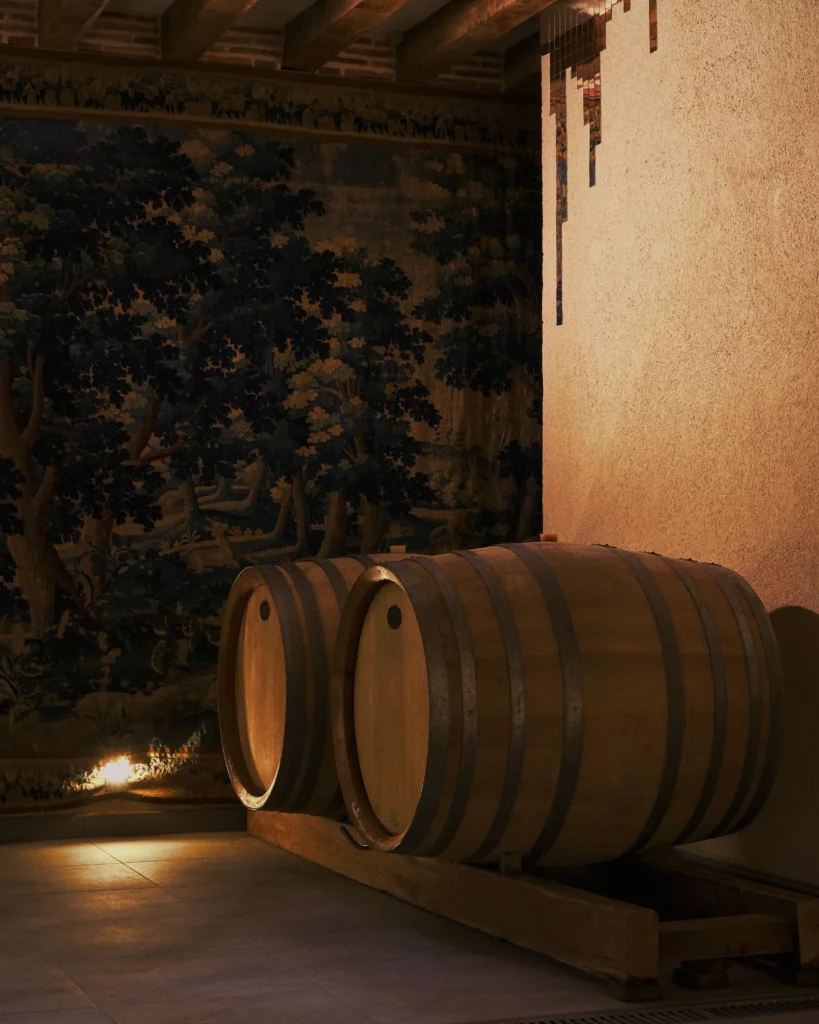
Aging in oak adds a new dimension to Sancerre Blanc. The wood imparts refined aromas—subtle vanilla, toasted bread, mild spices, hazelnut—while natural micro-oxygenation softens the texture and reinforces the wine’s structure. This process brings greater depth and aging potential, often between 5 and 10 years.
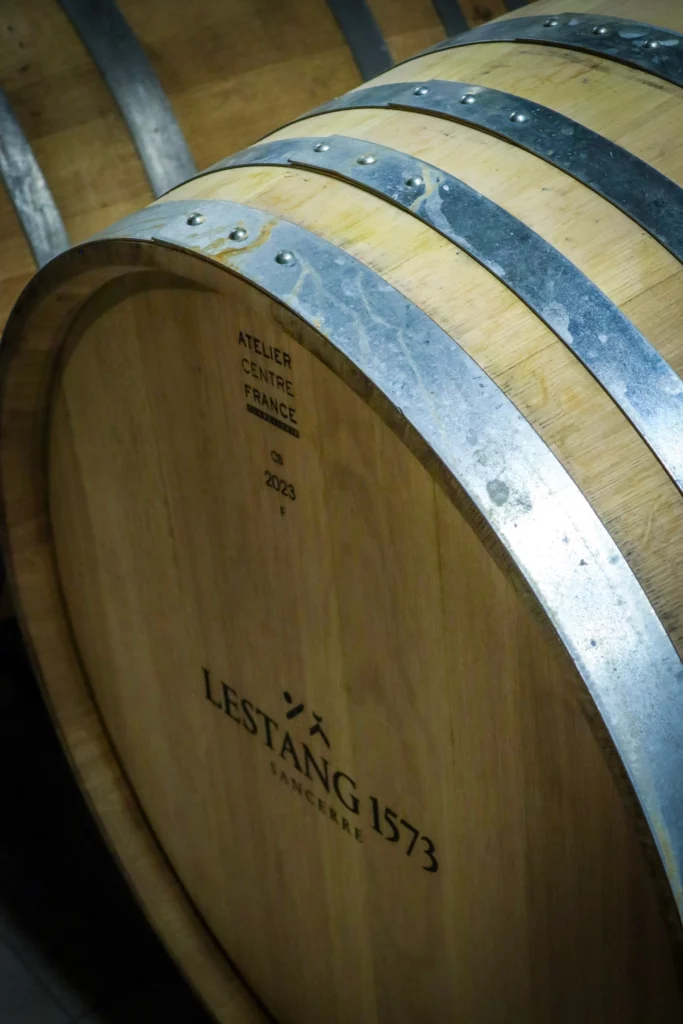
The barrel size also shapes the wine’s expression. Smaller 225L barrels intensify both wood influence and aromatic extraction. Larger formats, such as 600L demi-muids, offer a subtler imprint, allowing minerality and freshness to shine through more clearly.
Our cuvée L’Illustre Voyageur is crafted from old Sauvignon Blanc vines rooted in flint soils. It is aged in 600L oak demi-muids on fine lees with regular bâtonnage. After 12 months in barrel and an additional year of bottle aging, it reveals remarkable aromatic complexity, where the flint’s minerality blends with notes of elderflower, green apple, and verbena, all supported by a broad, balanced structure.
Aging in Stainless Steel: Purity and Precision of the Terroir
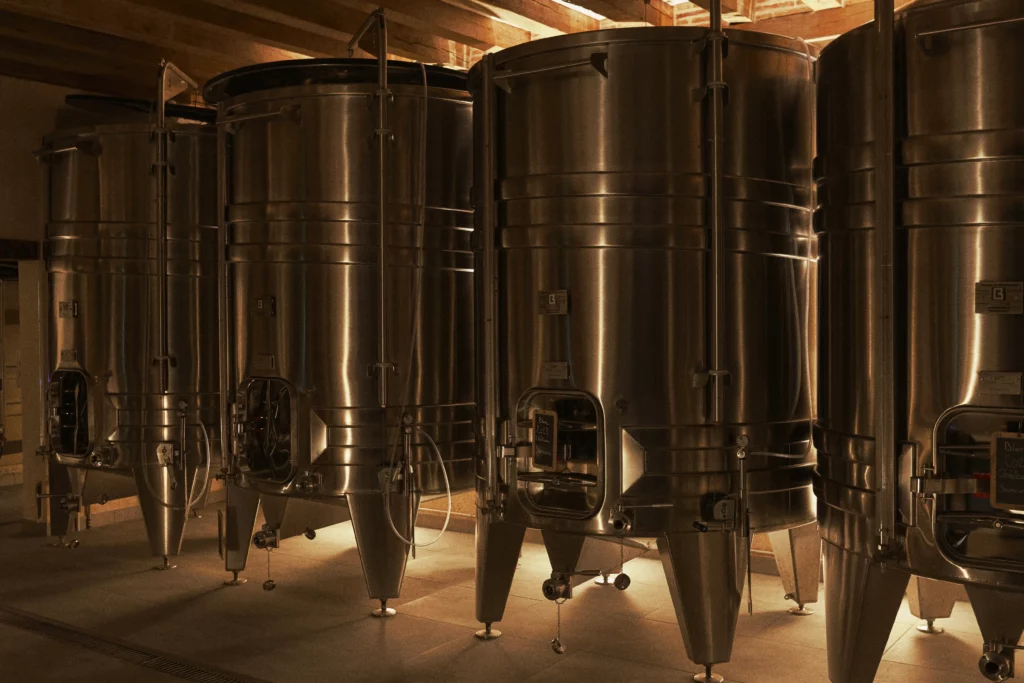
Stainless steel aging stands out for its complete neutrality. Unlike oak, steel imparts no external aromas, preserving the purest expression of Sauvignon Blanc. It emphasizes the grape’s primary aromas—zesty citrus, delicate white flowers, herbal notes—and highlights the sharp minerality of our flint-rich soils.
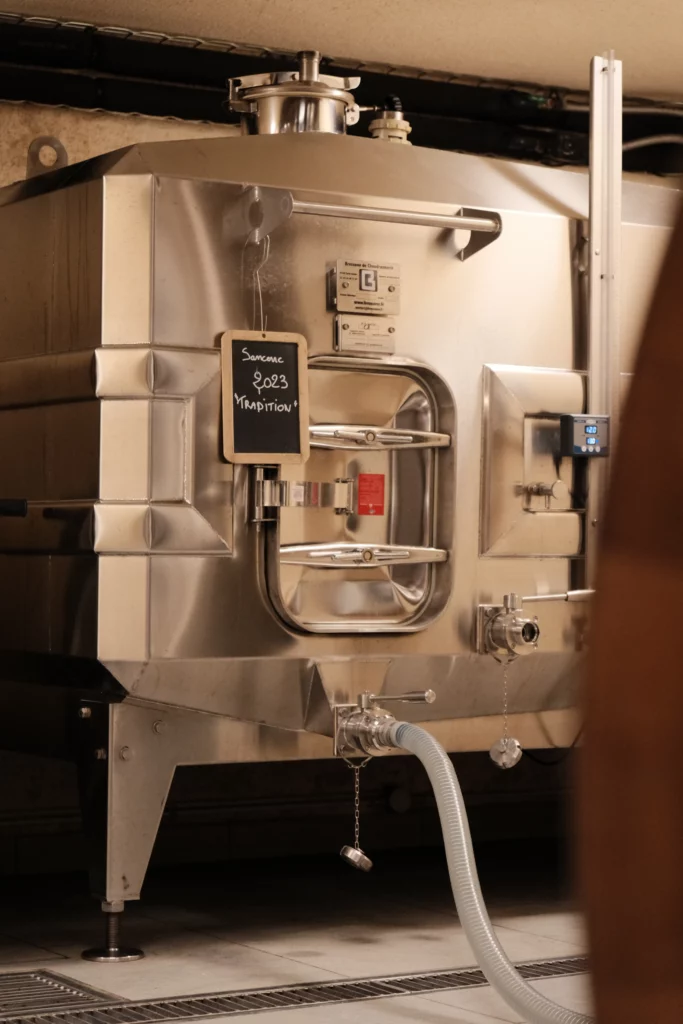
These tanks also provide technical precision, especially for controlling temperature during fermentation and aging. This is crucial to maintaining aromatic freshness and minimizing oxidation risks. For Sauvignon Blanc, such precision is key to preserving energy and clarity.
We use aging on fine lees with regular bâtonnage to enrich mouthfeel while staying true to the varietal and terroir. As always, fermentation is spontaneous using indigenous yeasts, with no additives.
Our Tradition cuvée is fermented and aged in stainless steel on fine lees for 12 months, followed by an additional year of bottle aging. The result is a taut, crystalline profile with vibrant citrus, flinty notes, and white-fleshed fruit—all wrapped in lively freshness and refined aromatic precision. Best enjoyed within 3 to 5 years to capture the vitality of Sauvignon Blanc and the mineral finesse of flint.
Comparison Table: Stainless Steel vs Oak Barrel — Through the Lens of Lestang 1573
| Criteria | Stainless Steel | Oak Barrel | Lestang 1573 |
|---|---|---|---|
| Aromas | Highlights primary notes (citrus, white flowers, herbaceous hints, minerality). | Develops secondary/tertiary aromas (vanilla, toast, spices, hazelnut, ripe fruit). | Tradition : vibrant citrus, gunflint, crystalline freshness. L’Illustre Voyageur : elderflower, green apple, verbena, bergamot. |
| Texture & Mouthfeel | Vibrancy, tension, precise aromatic profile. | Roundness, silkiness, persistent finish. | Tradition : citrusy tension, subtle balance. L’Illustre Voyageur : broad structure, layered complexity. |
| Aging Techniques | Fermentation and aging in neutral vessels; strict temperature control; aging on lees with bâtonnage possible. | Barrel or demi-muid aging; natural micro-oxygenation; wood contact varies by barrel size. | Tradition : 12 months in stainless steel on fine lees, regular bâtonnage, 1 year bottle aging. L’Illustre Voyageur : 12 months in 600L demi-muids on fine lees with bâtonnage, 1 year bottle aging. |
| Oenological Impact | Total neutrality, pure aromatics, greater stability, reduced sulfite needs. | Controlled oxygenation, subtle tannin integration, enhanced complexity. | Both cuvées : no additives or commercial yeasts, pure expression of flint terroir. |
| Aging Potential | 3 to 5 years—best enjoyed young for energy and freshness. | 5 to 10 years—with added depth and aromatic evolution. | Tradition : ideal between 3–5 years. L’Illustre Voyageur : designed to age 5–10 years. |
The choice between oak barrel and stainless steel aging shapes the identity of a Sancerre Blanc as much as the flint terroir it’s born from. While stainless steel champions freshness, precision, and purity, oak aging introduces structure, depth, and a longer aging arc.
At Lestang 1573, our signature cuvées embody this duality: Tradition celebrates the electric vibrancy and sharp minerality of Sauvignon Blanc raised in stainless steel, while L’Illustre Voyageur expresses the elegant depth and balance bestowed by oak demi-muids. Two distinct yet complementary interpretations of a singular terroir—for a complete tasting journey through Sancerre’s finest expressions.