


An inside look at the patient process that transforms our grapes into exceptional wines.
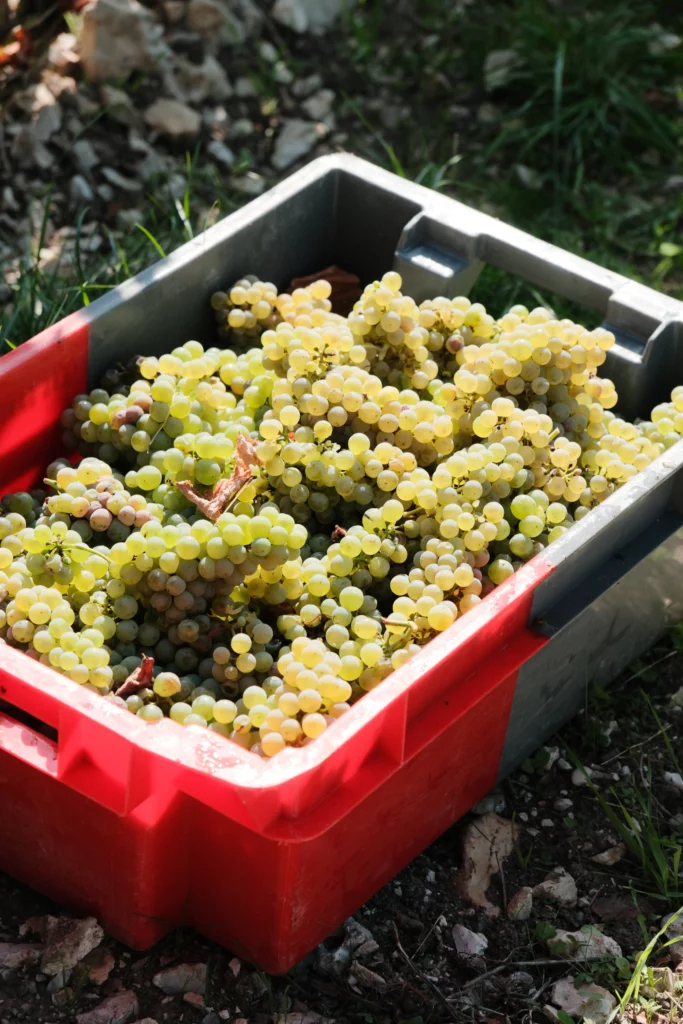
Once we complete the hand harvest of our Sauvignon Blanc on the flinty slopes of Sancerre, a long and meticulous journey begins—one that will carry the fruit from fresh grapes to bottled wine, nearly two years later. At Lestang 1573, every action, every technical choice is made to faithfully express our unique 100% flint terroir.
Harvest and Pressing: Preserving the Fruit’s Integrity
Harvest and Pressing: Preserving the Fruit’s Integrity
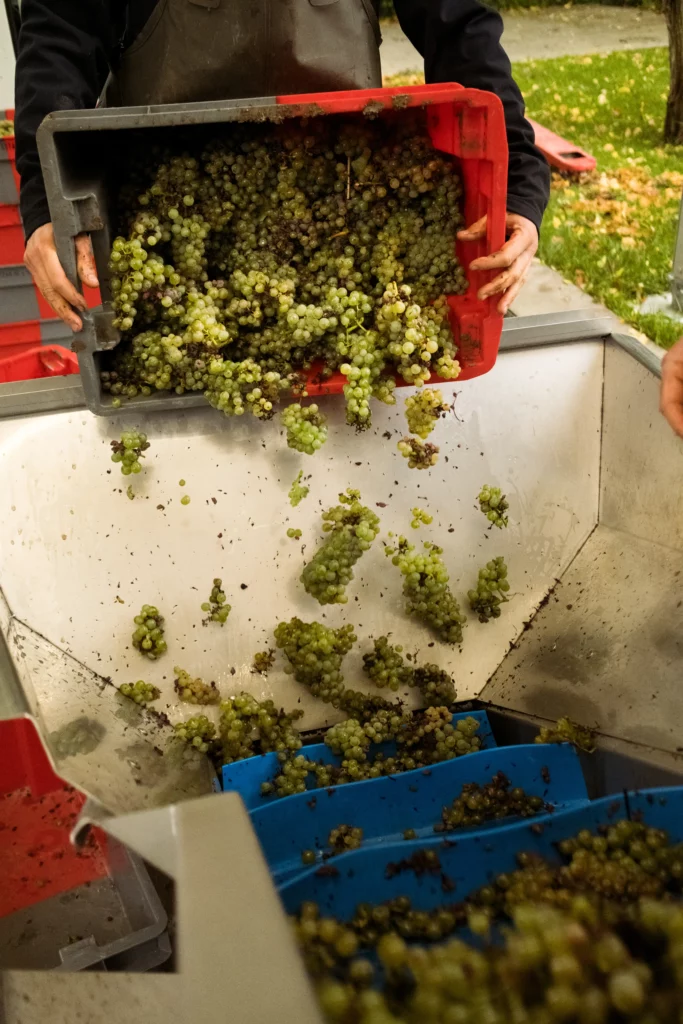
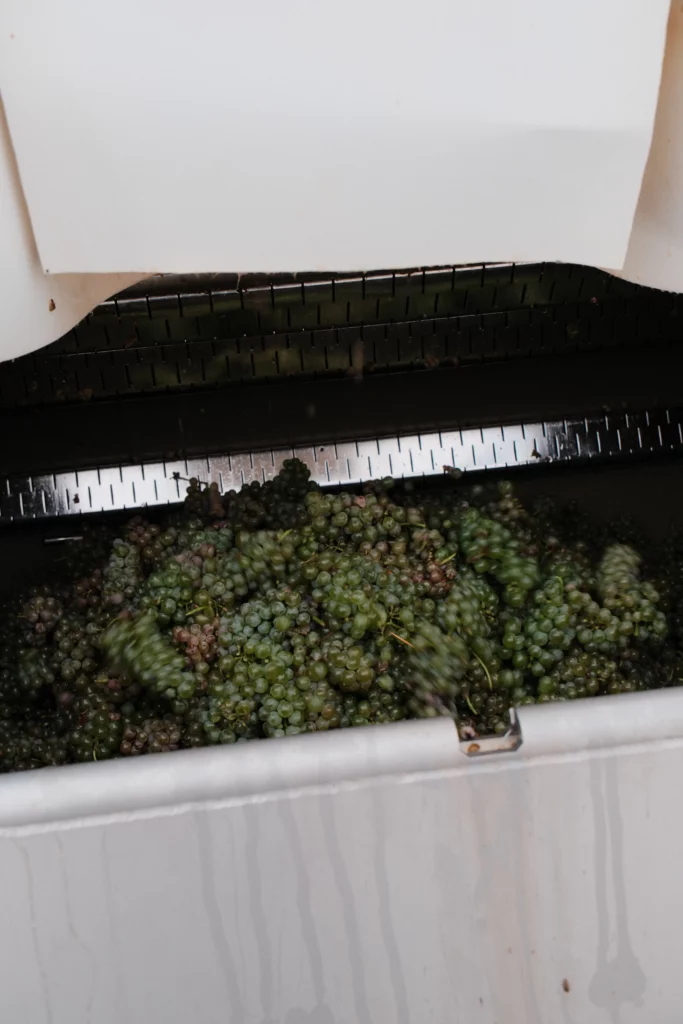
All of our grapes are hand-picked to preserve their purity. As soon as they arrive at the winery, they are gently pressed in a pneumatic press. This delicate method avoids extracting bitter compounds and preserves the bright aromatic profile of Sauvignon Blanc: citrus, white fruit, and mineral tension.
Clarification and Fermentation: Guiding the Transformation
After pressing, the must is cold-settled to remove heavy lees while keeping the precious aromatic precursors.
Each cuvée is fermented according to its character:
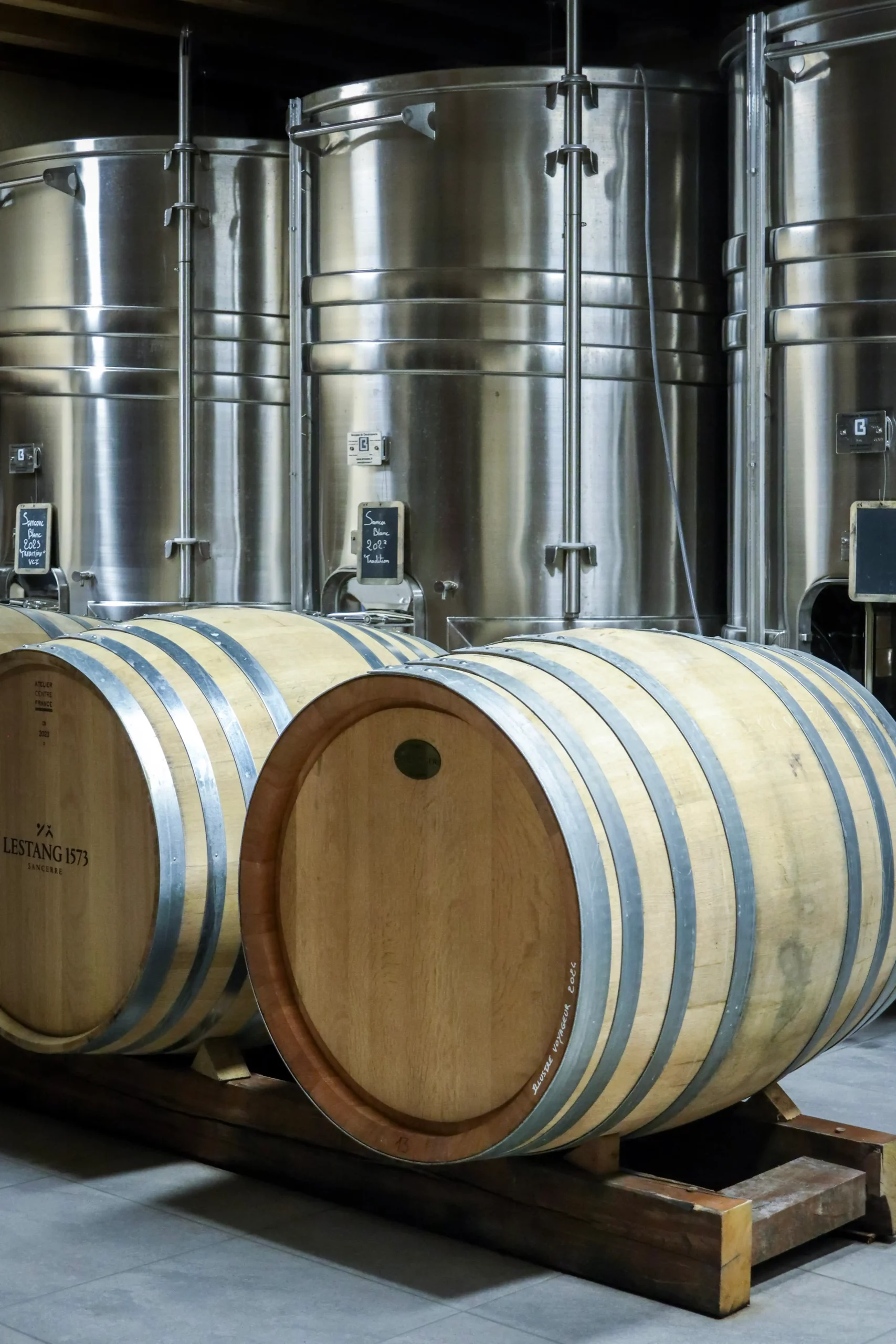
- Tradition: Fermented in stainless steel tanks with neutral yeasts to capture freshness and aromatic precision.
- Illustre Voyageur: Fermented in demi-muids with neutral yeasts as well, to build complexity and depth.
Ageing and Time: Two Years of Patience
Next comes the ageing phase, with the wines resting on fine lees—a contact that naturally enhances roundness and texture.
- Tradition: 12 months in stainless steel, followed by 12 months in bottle.
- Illustre Voyageur: 12 months in used demi-muids, followed by 12 months in bottle.
In total, it takes nearly 24 months before our cuvées are released for tasting.
Two Styles, One Identity
Stainless steel preserves purity and mineral tension, giving the Tradition cuvée its radiant freshness.
Demi-muids encourage gentle micro-oxygenation, enriching the Illustre Voyageur cuvée with remarkable depth and complexity.
Two distinct expressions, both true to our flint terroir.
Our Philosophy: Passing on Knowledge, Preserving Legacy
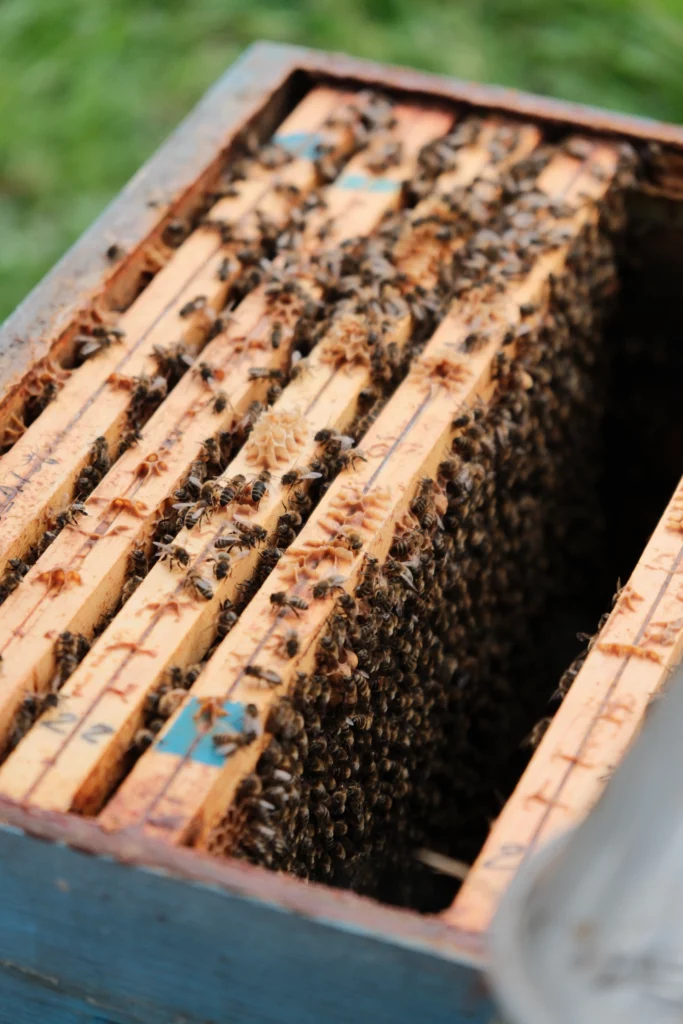
Beyond technique, every gesture is guided by a commitment to sustainability. As the first independent winery certified “Bas Carbone” by ADEME, we work according to the principles of organic farming and agroecology: eco-grazing, cover crops, beehives, hedgerows for pollinators.
We share and transmit these practices because they shape both the quality of our wines and the future of our environment.

At Lestang 1573, winemaking is an act of transmission—from the land to the wine, from our craft to those who taste it. Each bottle becomes the ambassador of a place, a vintage, and a patient timeline—the one required for a flinty wine to reveal its true soul.