


In the golden triangle of the Sancerre appellation, Lestang 1573 enjoys a privileged location and upholds an exceptional winemaking heritage. This unique vineyard, defined by its 100% flint terroir, has embarked on an organic journey that honors the vine’s natural rhythms and enhances the surrounding biodiversity. Discover how, through the seasons, this harmonious dance between humanity and nature unfolds, giving rise to wines of unparalleled finesse and depth.
Winter: a time of rest and preparation
When the vines stand bare and nature seems asleep, paradoxically this is a period of intense activity for the winemakers at Lestang 1573.
Pruning: an ancestral art adapted to contemporary challenges

Pruning, a fundamental step carried out following the “Guyot Poussard” method, is executed with meticulous precision, respecting the sap flow. This technique preserves the longevity of the vine while optimizing the future quality of the grapes.
“At Lestang 1573, this work is 100% manual! Our teams conscientiously tend each vine to ensure harmonious development.”
The spurs, which will soon bear the precious fruit, are deliberately left uncleaned to exert pressure on the vine and delay budbreak, thus reducing spring frost risk. Young vines, meanwhile, receive special attention and are pruned as late as possible.
Eco-grazing: when sheep become vintners

In this remarkable symbiosis between agriculture and livestock, sheep peacefully roam the vine rows. This practice, far from anecdotal, fulfills three key functions:
- Providing natural weeding, eliminating the need for herbicides
- Enriching the soil with organic matter
- Improving the estate’s carbon footprint
“This simple, effective, and respectful approach to our terroir reaffirms our commitment to biodiversity and carbon neutrality,”.
Spring: vine awakening and vegetal rebirth
With the return of fair weather, the vineyard comes to life with renewed vitality, and work intensifies to support this awakening.
Green pruning: assisted natural selection
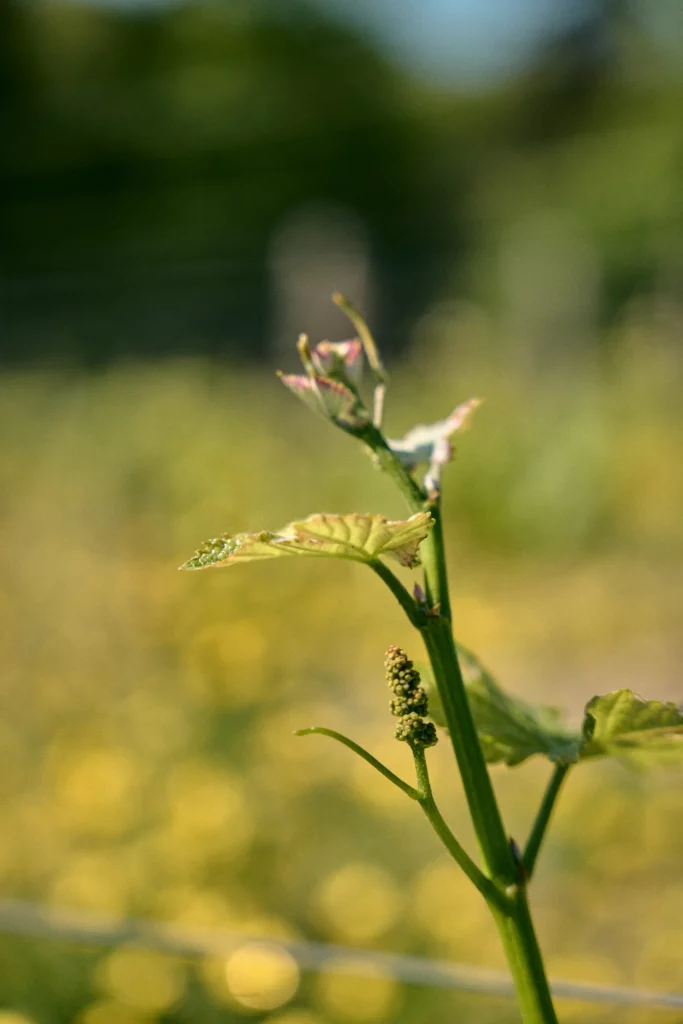
Performed entirely by hand, green pruning consists of removing superfluous shoots from each vine. Although demanding, this intervention proves decisive for the grape’s future quality:
It reduces disease risk, thereby decreasing treatment needs
It concentrates sap on the most vigorous canes
It limits cluster quantity, favoring better-nourished, more uniform grapes
It aerates the vines, improving sun exposure for future bunches
Flourishing biodiversity: a balanced ecosystem
Spring also sees the richness of this exceptional environment bloom. Floral diversity attracts butterflies and pollinating insects, while Arabian alfalfa, resembling clover, grows between the rows. Thanks to bacteria in its root nodules, this legume captures atmospheric nitrogen, naturally integrating it into the soil after mowing.
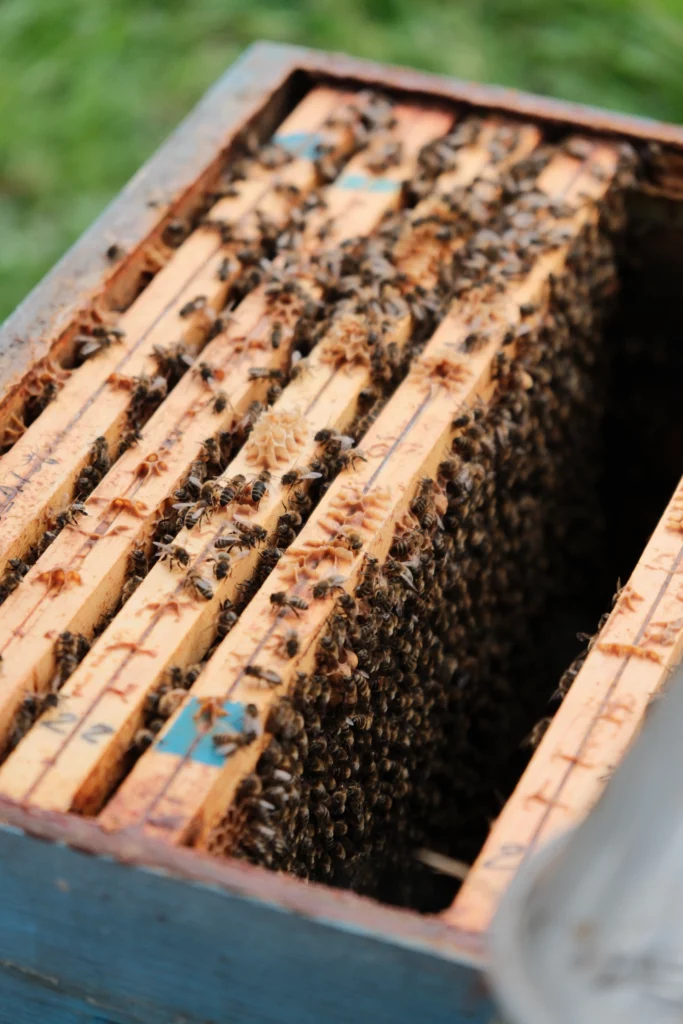
“Bees play an essential role in our ecosystem: they pollinate, nourish, connect. By welcoming these precious allies, we continue our commitment to a living, healthy, and resilient environment.”
Summer: ripening and harvest preparation
Under the summer sun, the Lestang 1573 vineyard enters a crucial phase where every decision influences the quality of the coming vintage.
Careful monitoring and attentive treatments
The flint terroir of Château de Lestang has a remarkable trait: these stones absorb heat during the day and release it at night, accelerating berry ripening and imparting the brilliant minerality so characteristic of the wines.
Teams closely track cluster evolution, maintaining the vineyard’s natural balance through limited, environmentally respectful interventions.
Harvest: the moment of truth
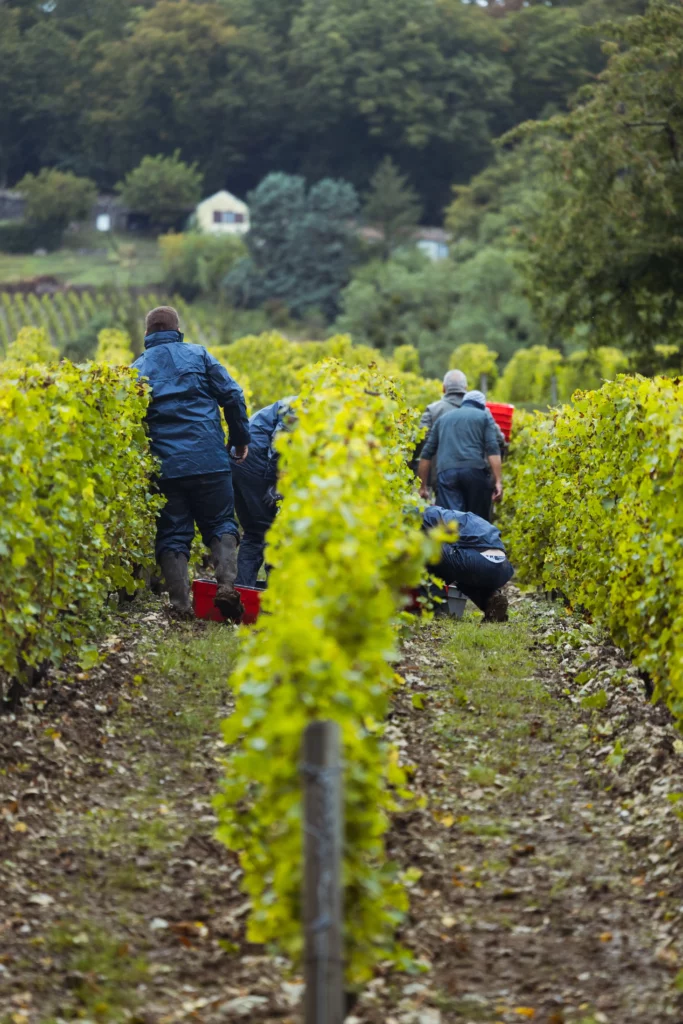
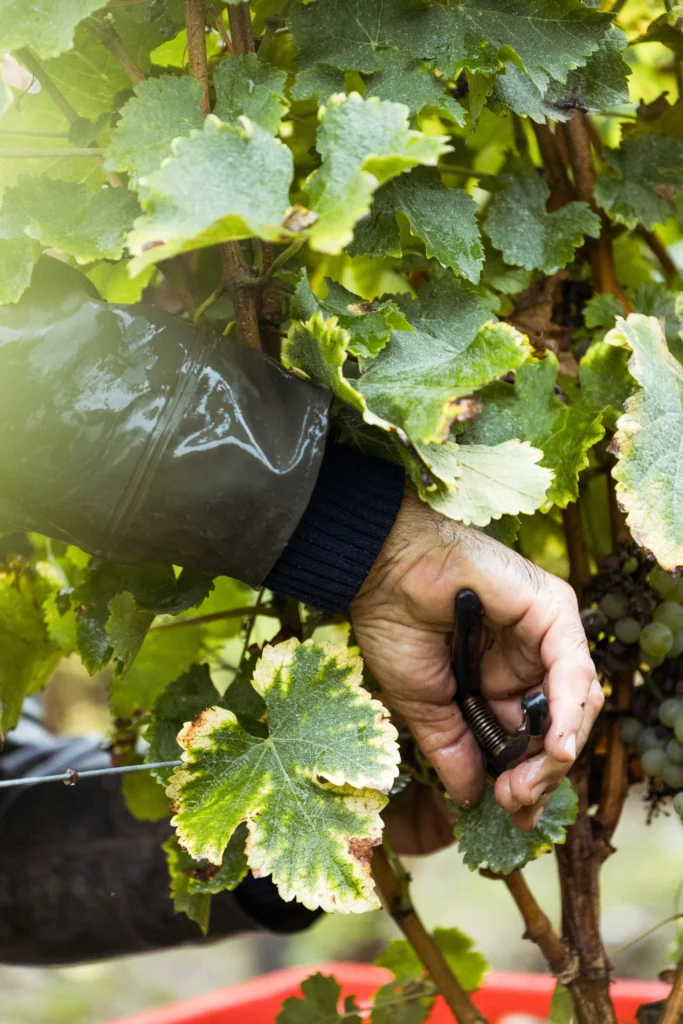
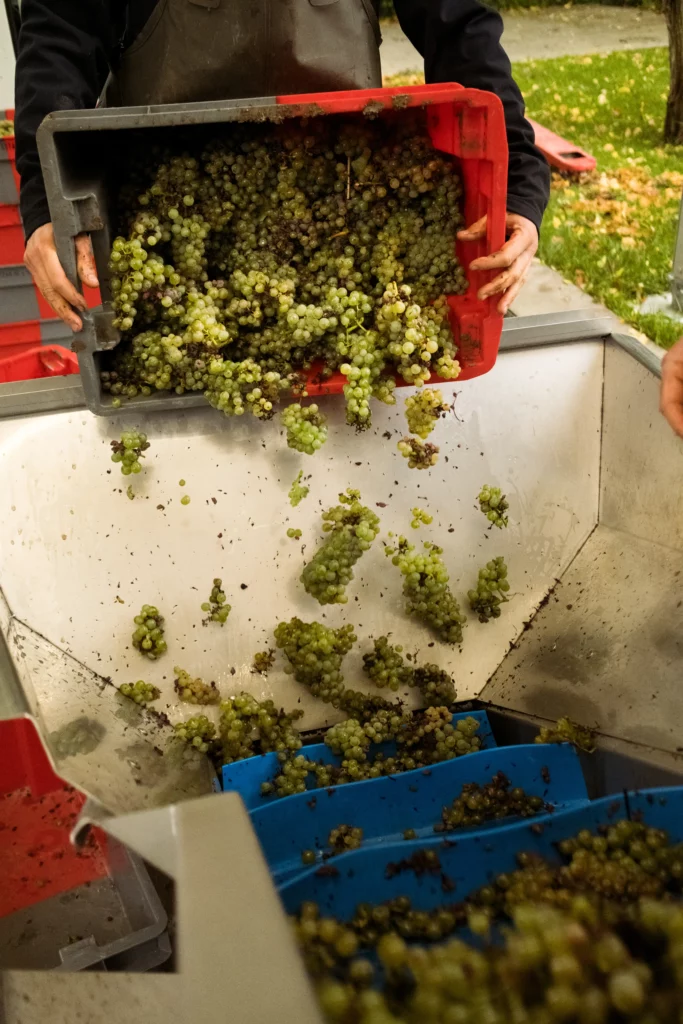
Usually taking place in September, the harvest at Lestang 1573 is entirely manual, using 15 kg crates to avoid grape crushing. Although more costly and time-consuming, this method preserves fruit integrity and ensures optimal selection:
- Picking clusters at perfect ripeness
- Rigorous sorting directly in the vineyard
- Gentle transport to the winery
- Pneumatic pressing with drains, respectful of the fruit
Autumn: vinification and celebration
Autumn marks the start of a new phase in the viticultural cycle: transforming grapes into wine and the first moments of sharing around the new harvest.
Natural vinification: the art of minimal intervention
“Our wines are the authentic reflection of our terroir. We eliminate all chemical additives to fully express the soil’s richness and each vintage’s typicity.”
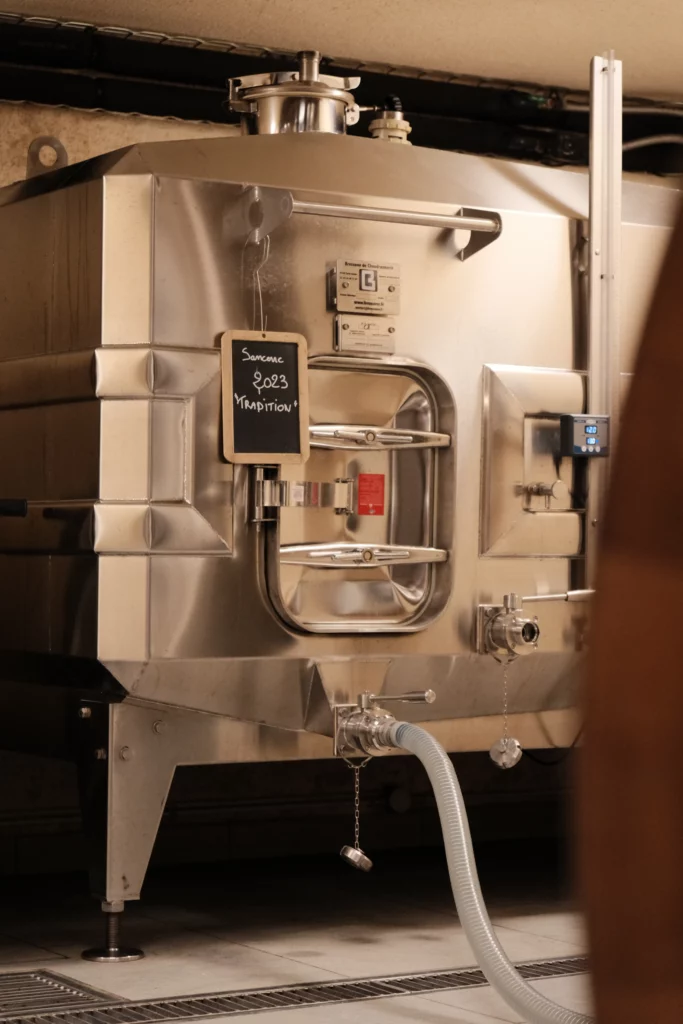
In the château’s restored cellar, vinification follows two distinct approaches for the Tradition and L’Illustre Voyageur cuvées:
- Cuvée Tradition: Fermentation in stainless steel tanks, aged on fine lees for one year with regular stirring to enrich the aromatic profile.
- Cuvée L’Illustre Voyageur: From the estate’s oldest Sauvignon Blanc vines, this confidential cuvée is élevaged in demi-muids (oak barrels) for a full year on lees, benefiting from regular stirring.
The barrels are meticulously topped up weekly to replace natural evaporation and prevent air contact.
Harvest Festival: tradition and conviviality
Autumn is also the time to celebrate the fruits of labor. Château de Lestang hosts its annual harvest festival, welcoming artists and wine lovers for authentic moments of sharing, “simple and sincere, in the spirit of the estate’s lifestyle.”
The following winter: rest and preparation for commercialization
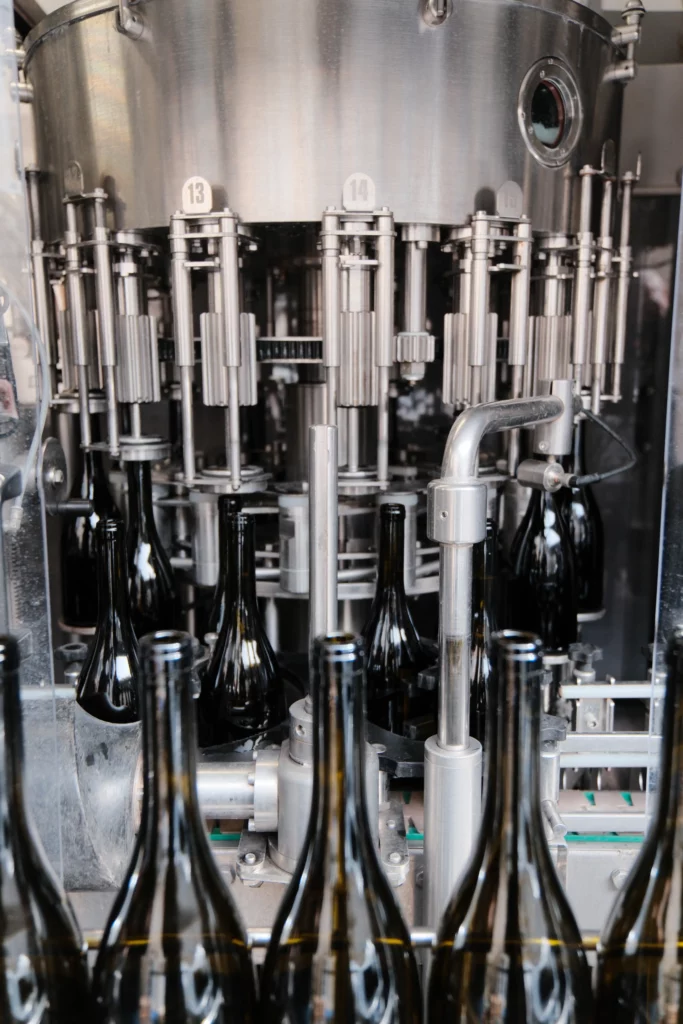
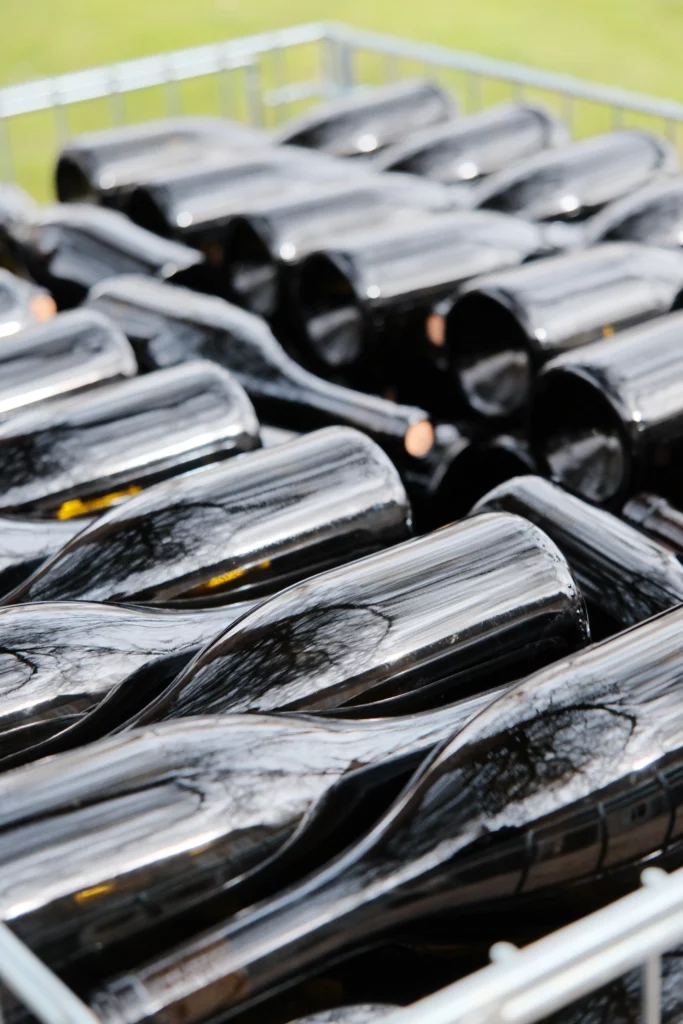
One year after harvest, the cycle continues with bottling the wines, which will rest another year before release.
A necessary rest to reach excellence
Whether Tradition or L’Illustre Voyageur, each vintage is carefully bottled after its aging year and stored under optimal conditions to achieve perfect stability.
“Every wine crafted at Château de Lestang is the result of meticulous expertise, where tradition and innovation meet.”
During this rest period, the estate also partakes in the Saint-Vincent celebration, the winegrowers’ festival in January, thus maintaining ties with the Sancerre wine community.
A global philosophy of environmental respect
Beyond the annual production cycle, Lestang 1573 embraces a comprehensive and exemplary environmental approach:
- First independent wine estate certified Low Carbon by ADEME
- Preservation of water resources thanks to the numerous springs on the property
- Protection of biodiversity with over 136 tree and shrub species recorded
- 1,200 meters of hedges planted to encourage beneficial insects
- Use of lighter bottles made from recycled glass to reduce carbon impact
An exceptional terroir, an authentic commitment
Lestang 1573 perfectly embodies the union of an exceptional terroir and a nature-respecting philosophy. Through this organic viticultural cycle, every step is designed with sustainability and excellence in mind, allowing the crafting of wines that tell a story—one of a heritage-rich place with a forward-looking vision.
The wines born of this meticulous work offer enthusiasts a unique sensory experience, a true reflection of this holistic approach where humanity accompanies nature rather than seeks to constrain it.